Posted on

Phone Story

followthethings.com
Electronics

Phone Story
An iPhone, iPod Touch & iPad game created by Paolo Pedercini & Michael Pineschi for Molleindustria in partnership with the Yes Lab.
Banned from the App Store. Google Play archived page here. Play online here. Game website here.

Imagine you’re on Apple’s App Store looking for a new game to play on your iPhone or iPad in September 2011. You see one called Phone Story. Its levels show how your iPhone or iPad were made. The rare metals that make them work so quickly – like Coltan – are extracted from the soil in the Democratic Republic of The Congo by children. The devices are made in a factory in China where the regime is so relentless that workers jump to their deaths from the roof. When a new model comes out, people queue for days and it seems they would run across a busy highway to get to the store before someone else. And then there’s all the e-waste that is generated when the phones that are replaced get thrown away. So, how do you progress through the levels? You’re a soldier who has to bash kids on the back of the head if their Coltan-digging slows. You’re ambulance crew trying to catch workers trying to jump to their deaths from the factory roof. You get the picture. This ‘first anti-iPhone iPhone game’ is hilariously cruel, tasteless, offensive, meta. But it’s 100% based on what’s happening in Apple’s supply chain right now. And what’s more offensive: the game or what it depicts? 901 people pay 99cents and download it. But it’s only available for 4 days, before Apple remove it. People speculate. How on earth did it get there in the first place? And what does its removal mean for free speech? Phone Story went viral as the ‘game Apple didn’t want you to play’. But, you could still play it on your Android phone or computer. You can still do the latter, here. How well would you want to do? What does it mean to get a high score?

Page reference: Eeva Kemppainen, Charlotte Edwards, Toby Bain, Wilhelm Wrede, Sophie Biddulph & Jamie Hall (2012) Phone Story. followthethings.com/phonestory.shtml (last accessed <insert date here>)

Estimated reading time: 46 minutes.

Continue reading Phone Story

Loading

Posted on

Bright Smiles, Dirty Secrets

followthethings.com
Health & Beauty

Bright Smiles, Dirty Secrets
Undergraduate coursework designed & written by Talisker Alcobia Cornford.
Originally published on the followthethings.com blog here.

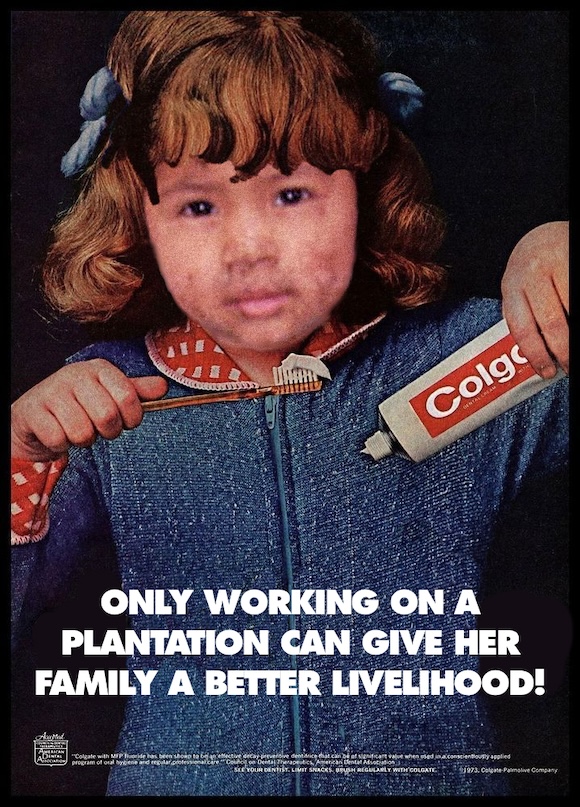
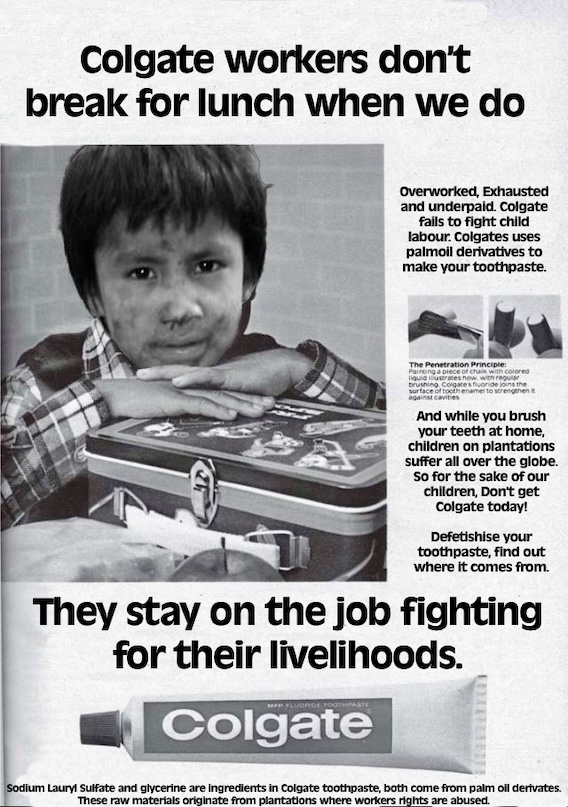
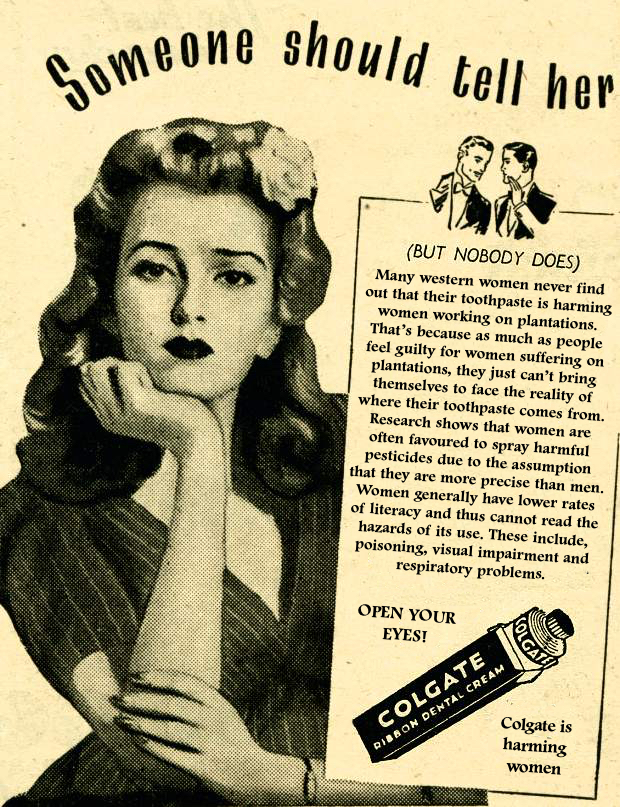
Talisker is taking ‘the’Geographies of Material Culture’, the Exeter University module behind our website. At the start of the module, CEO Ian asks everyone to choose an everyday commodity, zero in on one or more of its ingredients, search online for human and other stories of its making, and then experiment with forms of cultural activism to make these relations public. It’s often more interesting to choose something you have absolutely no idea about – he says – no preconceptions about, like something whose ingredients are chemicals, with names you don’t recognise, listed on the packaging in tiny writing that’s hard to read, especially when we use them bleary-eyed, first thing in the morning. Toothpaste is an excellent example. Whose lives are in these kinds of commodities? Talisker culture jams some Colgate ads to add some missing supply chain information to them. But why isn’t her response to simply shop for a different brand? Why’s she making these spoof ads? Who does she want to see them? Where would she like them to be displayed?

Page reference: Talisker Alcobia Cornford (2020) Bright Smiles, Dirty Secrets. followthethings.com/bright-smiles-dirty-secrets.shtml (last accessed <insert date here>)

Estimated reading time: 8 minutes.

Continue reading Bright Smiles, Dirty Secrets

Loading

Posted on

Plastic China

followthethings.com
Recycle my waste

Plastic China
A documentary directed by Jiuliang Wang for CNEX, Beijing TYC & Oriental Companion Media
YouTube trailer and pay-per-view stream embedded above. Search online for other streaming options here.

Recycling plastic is a good thing right? But where does it go to be recycled? Who does recycling work? And what’s that work like? This film traces the world’s plastic waste to a small village in China where families sort, clean and shred it by hand and by machine. Some of it is processed to make nurdles – the tiny plastic beads that factories buy in bulk to melt and make recycled plastic goods. A lot of it isn’t – partly because there are so many types of plastic, and those nurdles can’t mix them together. The film shows the labour of plastic recycling from the perspective of an 11 year old girl called Yi-Jie. Her family eke a living processing plastic waste shipped into their lives from all over the world. She recycles full time to help earn money for, and alongside, members of her impoverished family. Some of the plastic packaging she processes includes images of wealthy consumers enjoying the goodies that they used to contain. These images feed Yi-Jin’s dreams of a better life. She plays imaginative games with the plastic packaging that surrounds her. In one scene she makes and plays with a plastic waste computer. But her family doesn’t earn enough for her to attend school. She doesn’t seem to be going anywhere. Audiences for trade justice activism are used to worrying about who makes their stuff down the supply chain. But the hidden lives and labours in commodities don’t disappear when they’re purchased. Others become attached to them when they’re thrown away. The same labour (and environmental) rights issues are there to worry about too. The materials that commodities are made from never disappear. They just appear somewhere else, in other people’s work, lives and landscapes. This film was terrible PR for the Chinese government. Not surprisingly, they banned it from being shown there. But they went much further, banning the importing and recycling of plastic waste from overseas. Shutting down an industry is perhaps the most powerful impact that trade justice activism can have. But is this what the filmmakers had in mind when they decided to make Plastic China? Could they have predicted that this might happen? What’s their responsibility towards Yi-Jon and her family?

Page reference: Ian Cook et al (2024) Plastic China (holding page). followthethings.com/plastic-china.shtml (last accessed <insert date here>)

Estimated reading time: tbc minutes.

Continue reading Plastic China

Loading

Posted on

Primark – On The Rack

followthethings.com
Fashion

Primark – on the rack
A documentary film presented by Tom Heap & produced by Frank Simmonds with Dan McDougall for BBC TV’s Panorama series.
Screenshot slideshow of the contested scene embedded above. Watch on Box of Broadcasts (with institutional login) here.

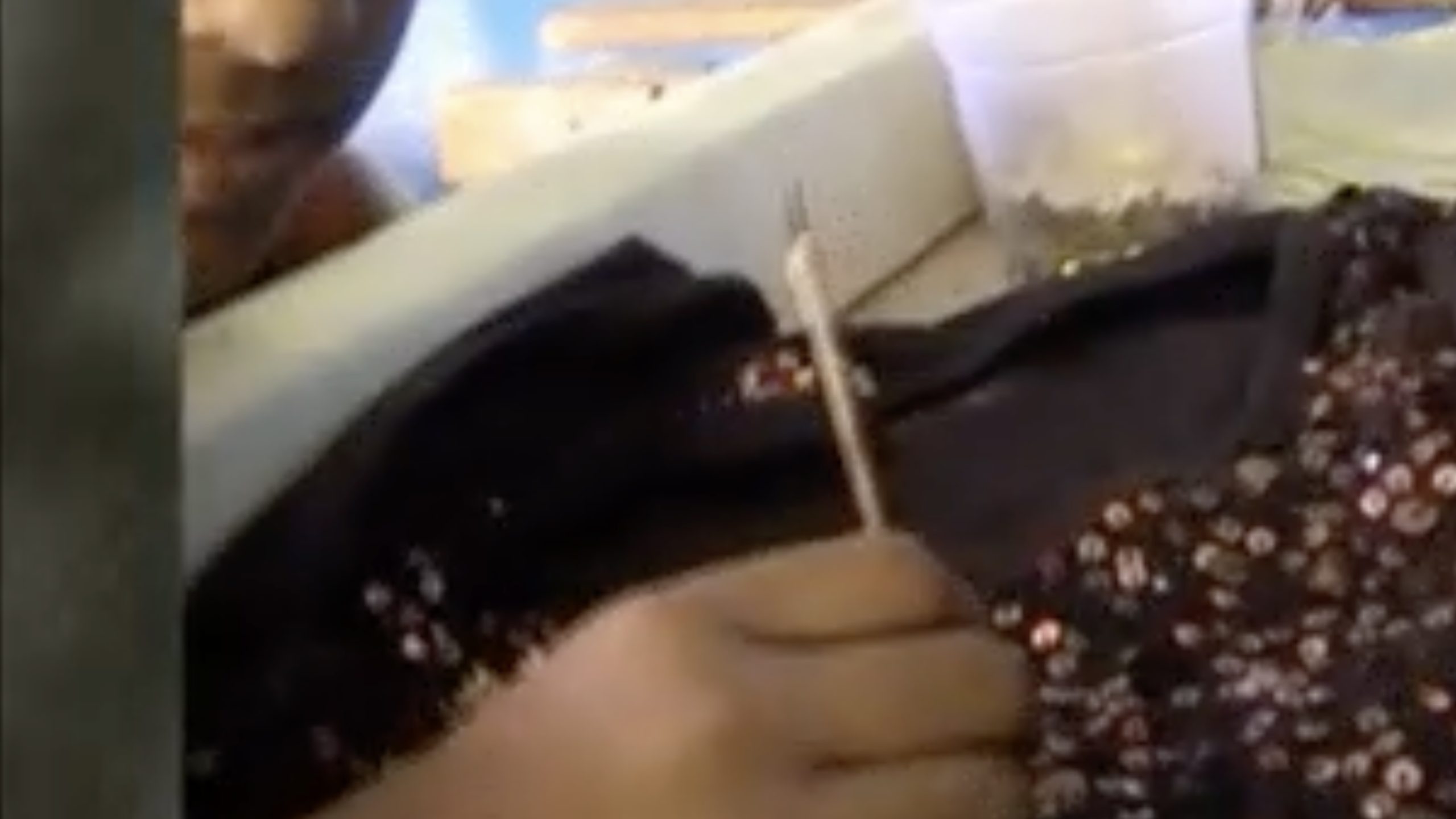
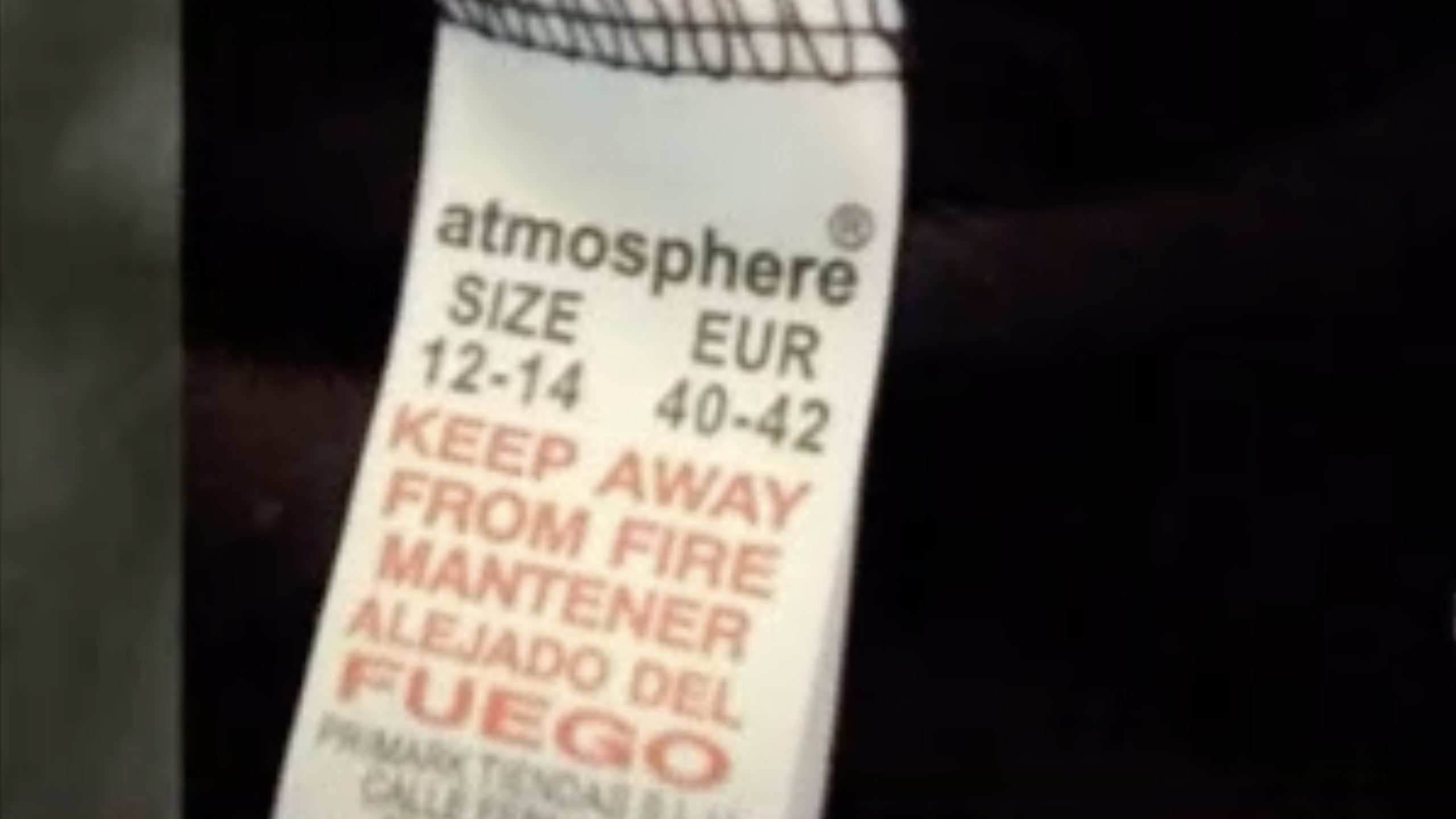
The BBC produces an exposé of cheap clothing retailer Primark. It finds children making its clothes, and sewing and testing their sequins, in factories, slums and refugee camps in India. Primark is asked to contribute to the film before it’s shown. Instead, they decide to cut ties with the supply chains featured, then launch a website to counter the film’s claims. They research the film’s research to pick apart its claims, and then complain to the BBC that one 45 second scene (the one in the screenshots above) is fake. Their critic-silencing strategy has mixed success. The BBC is forced to admit that it cannot be 100% sure that the scene wasn’t faked, and the Panorama team are forced to hand back an award they were given for the film. But Primark’s persistent public attempts to silence this investigative journalism draws attention – for years – to the company’s reputation as the ‘poster boy of child labour in the UK’. Supporters of the film highlight the other 3,555 minutes of the film that Primark didn’t claim the producers had faked? Then, 5 years after the film was broadcast, the Rana Plaza factory complex in Dhaka, Bangladesh collapses and over a thousand garments workers are crushed to death making high street clothes. Journalists, filmmakers and others keep this tragedy relentlessly in the news. UK newspaper headlines refer to this as the ‘Primark factory’. There’s no way that this footage is fake. Primark has to react differently this time.

Page reference: Kate Adley, Richard Keeble, Pippa Russell, Noora Stenholm, William Strang and Tuuli Valo (2025) Primark – on the rack. followthethings.com/primark-on-the-rack.shtml (last accessed <insert date here>)

Estimated reading time: 124 minutes.

Continue reading Primark – On The Rack

Loading

Posted on

Sorry We Missed You

followthethings.com
Ship my order

Sorry We Missed You
A feature film written by Paul Laverty & directed by Ken Loach for 12 production companies including BBC Films & Canal+.
Official trailer embedded above. Search online to streaming options here.

‘Ricky and his family have been fighting an uphill struggle against debt since the 2008 financial crash. An opportunity to wrestle back some independence appears with a shiny new van and the chance to run a franchise as a self employed delivery driver. It’s hard work, and his wife’s job as a carer is no easier. The family unit is strong but when both are pulled in different directions everything comes to breaking point’ (Source: Anon 2019, np link).

Page reference: Ian Cook et al (2024) Sorry We Missed You (holding page). followthethings.com/sorry-we-missed-you.shtml (last accessed <insert date here>)

Estimated reading time: tbc minutes.

Continue reading Sorry We Missed You

Loading