Posted on

62p An Hour

followthethings.com
Fashion

62p An Hour
A front page newspaper exposé by Ben Ellery published in the Mail on Sunday.
A video summary of the article by AJ+ is embedded above. Read the original article here.

The British high street fashion retailer Whistles collaborates with fashion magazine Elle and gender equality charity The Fawcett Society to sell a slogan t-shirt saying ‘This is what a feminist looks like.’ Their publicity campaign includes high profile British politicians (e.g. Harriet Harman & Ed Milliband) and celebrities (e.g. Emma Watson & Benedict Cumberbach) wearing them. The Mail on Sunday newspaper sends a reporter to the factory in Mauritius where the women who make them are paid 62p an hour. They are also women are photographed wearing them, and talk both about their work and what feminism means to them. The newspaper makes this front page news. The credibility of the Fawcett Society’s campaign and the celebrities supporting it are questioned. How can you declare your support for feminism by wearing a t-shirt that relies of the exploitation of women? Fair point perhaps. But what are the motives of the newspaper? Is their critique pro- or anti-feminist? Do they care that much for the workers? And is the situation as bad as they make out? Either way, Whistles immediately removes the shirts from sale. It’s a huge embarrassment.

Page reference: Jennifer Hart (2024) 62p An Hour (taster). followthethings.com/62p-an-hour.shtml (last accessed <insert date here>)

Estimated reading time: 11 minutes.

Continue reading 62p An Hour

Loading

Posted on

The Accord On Fire & Building Safety In Bangladesh

followthethings.com
Fashion

The Accord On Fire & Building Safety In Bangladesh
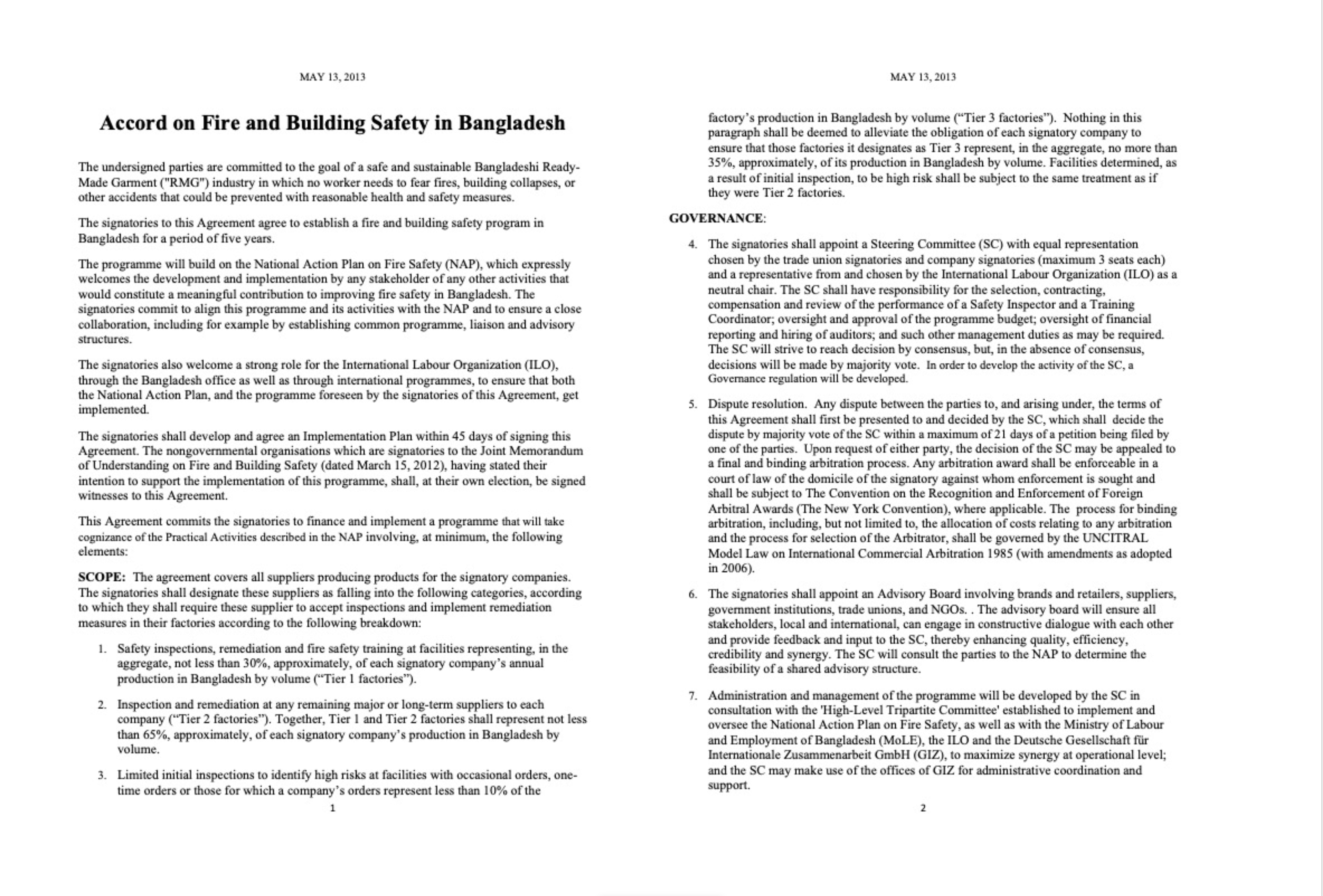
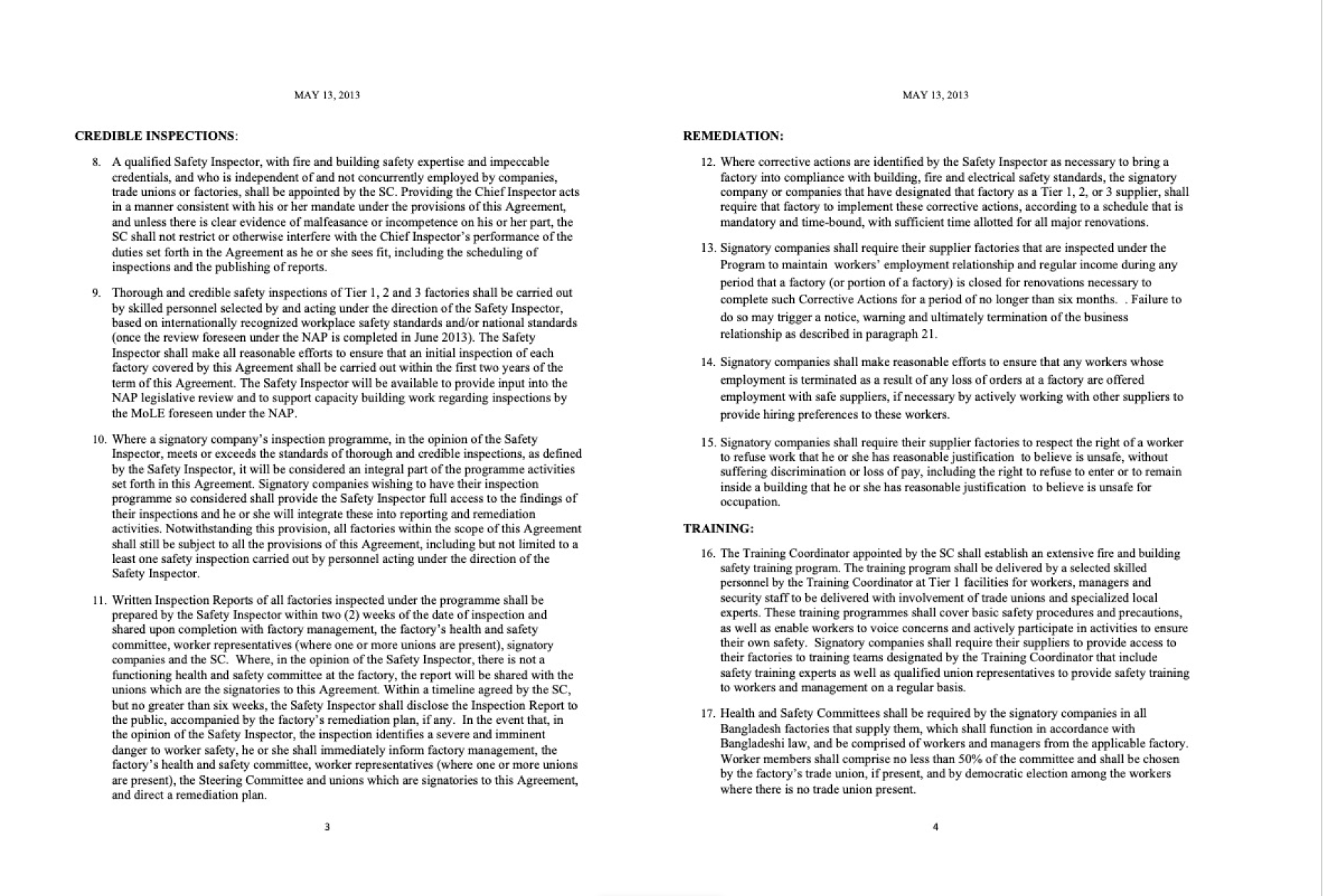
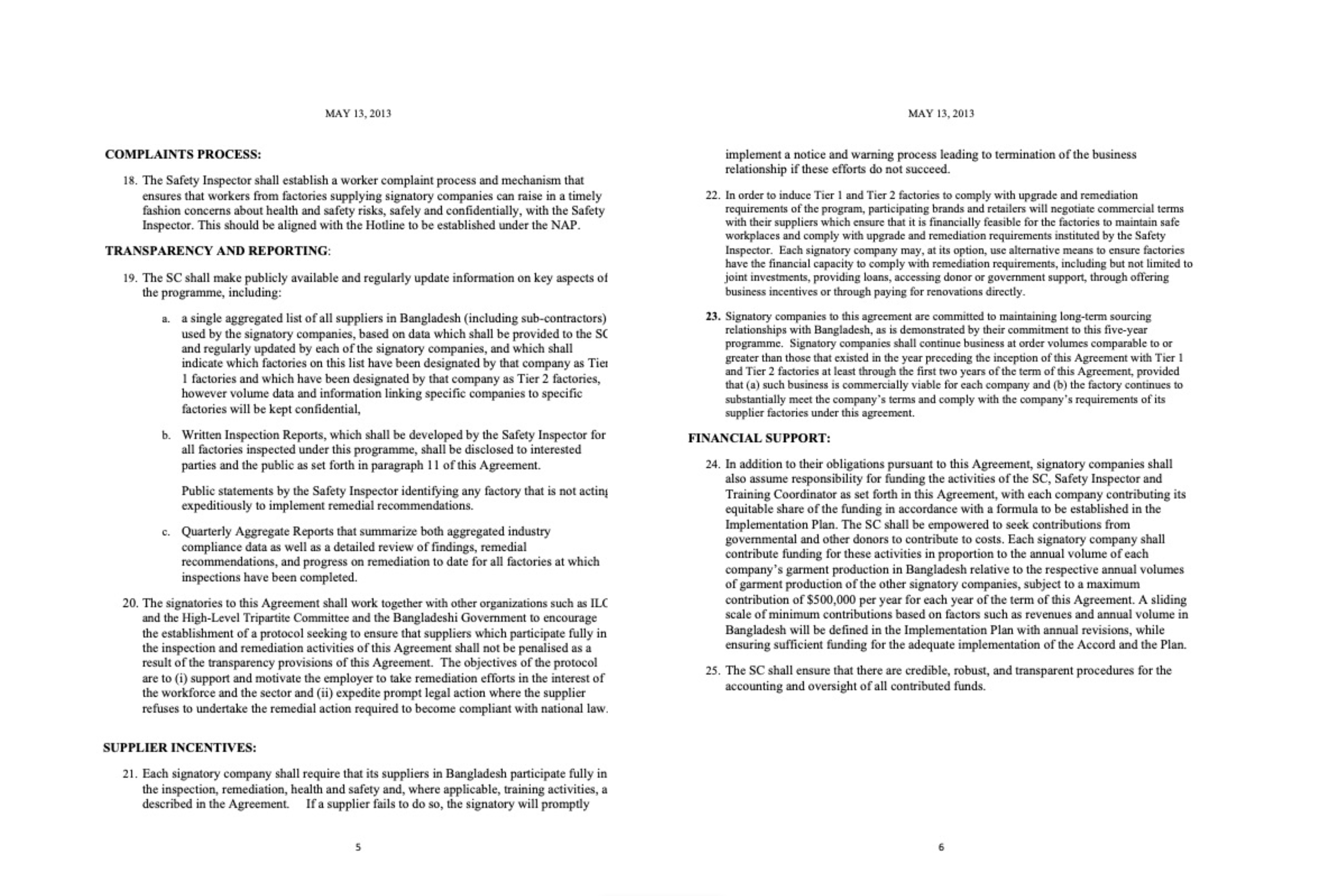
An independent legally binding global framework agreement between fashion brands, retailers & trade unions.
Click the screengrabs to read the agreement on IndustriALL Global Union’s website.

What if brands, retailers and labour unions could agree on a ways to ensure the safety of millions of people working in garment factories to prevent the factory fires and collapses that have killed and injured so many? They did, in the wake of the Rana Plaza factory complex collapse in Dhaka, Bangladesh in April 2013 where more than 1,100 garment workers making clothes for Western high street brands were crushed to death. Under this agreement, health and safety committees would be democratically elected in all factories and would identify and take action relating to concerns they identified. Factories would have independent safety inspections. The results and corrective actions outlined in these reports would be made public. The brands signing the agreement would continue to have their clothes made in the unsafe factories and would fund the corrective actions to make them safer. And factory workers would be trained in health and safety, could make complaints without fear of reprisal and could refuse to work in unsafe conditions. Wow! Could this work? Would brands sign up? Would workers see the benefits? What would happen 5 years later, when the agreement ran out? Could workers in other countries benefit from the same kind of agreement?

Page reference: Chris Crane, Alex Danvers, Robbie Foley, Will Kelleher, Mike Stanton & Adam Williams (2013) The Accord On Fire & Building Safety In Bangladesh (taster). followthethings.com/the-accord-on-fire-building-safety-in-bangladesh.shtml (last accessed <insert date here>)

Estimated reading time: 13 minutes.

Continue reading The Accord On Fire & Building Safety In Bangladesh

Loading