



Posted on

Tackle The Shackles

followthethings.com
Security

Tackle The Shackles
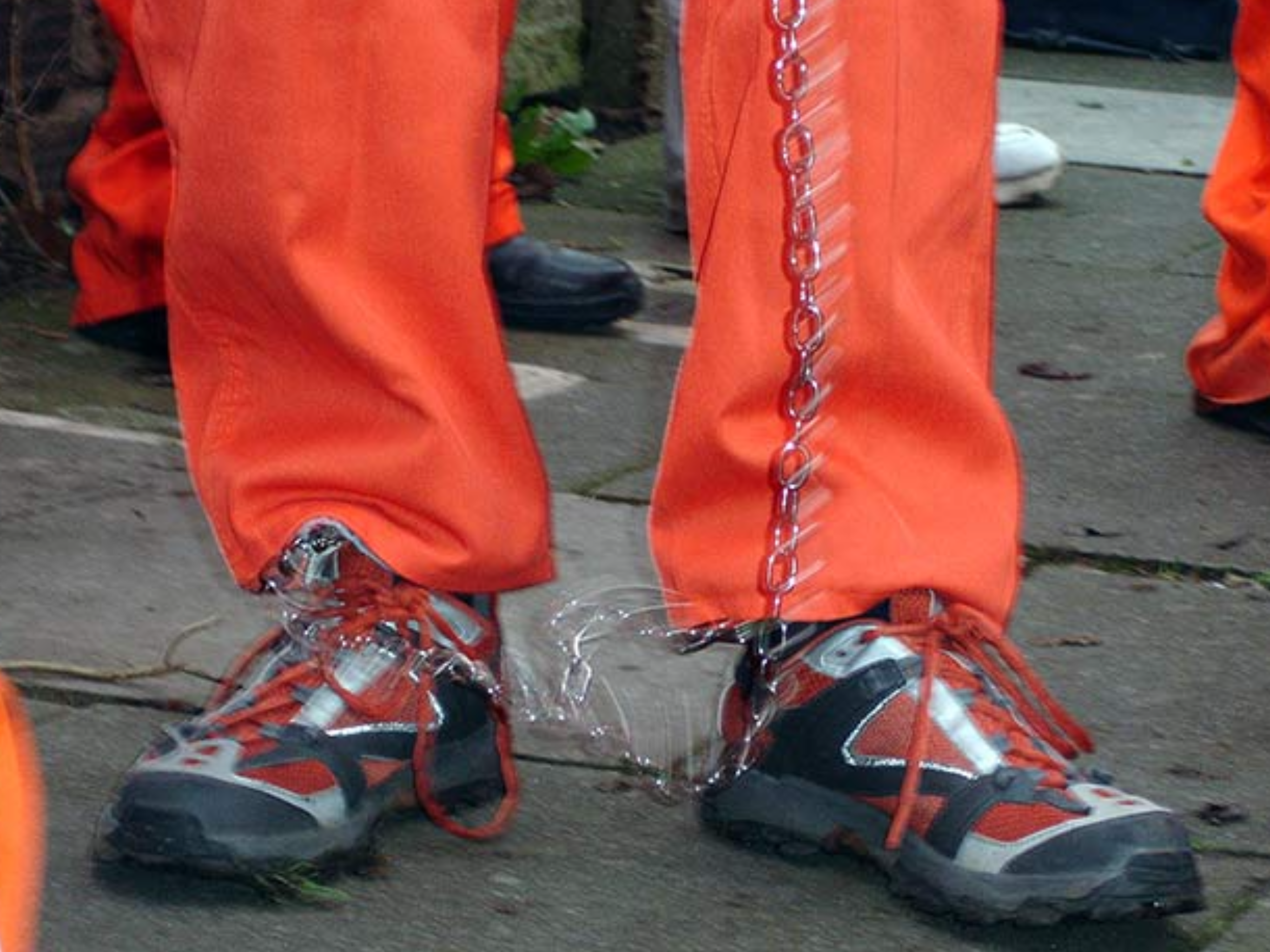
Two protests organised by Reprieve, Amnesty International, Save Omar Campaign & the Birmingham Guantanamo Campaign at Hiatt & Co, 111-115 Baltimore Road, Birmingham, UK (see map) on 8 September 2005 & 11 January 2007.
Selected photographs above. Featured in a scene from the documentary film ‘Taking Liberties since 1997’ (check streaming availability here and start at 1hr 20 minutes).

British citizens and residents are detained in the USA’s Guantanamo Bay detention centre, but none are charged with a crime. They notice the Hiatt & Co. leg irons restraining them are ‘Made in England’, or ‘Made in Birmingham’, just like them. When some go on hunger strike in 2005, and when the 5th anniversary of the camp’s opening takes place in 2007, musicians, doctors, lawyers, comedians and activists protest outside the Birmingham, UK factory where they are made. They dress as Guantanamo inmates and dance the ‘shackle shuffle’ to a live band performing on a flatbed truck. Former detainees, their family members, lawyers, celebrities and activists carry photos of detainees and give speeches. People chain themselves to railings and deliver a cake to the factory. Historically, protestors say, leg irons and other restraints were made in Birmingham to chain enslaved African people in the days of the British Empire. Their use at Guantanamo, they argue, is unethical and illegal. Does the export of these leg irons comply with the UK Government’s obligations under International law? Especially as Hiatt is owned by the UK’s BAE Systems and because the New Labour Government of the time had been loudly trumpeting its ‘ethical’ foreign policy. One detainee’s lawyer says, ‘If an ethical foreign policy means anything, it means not profiting from the torment of our own people.’ The protestors want to make this paradox mainstream news, and they succeed. In this trade justice activism, the violence and exploitation is found not where the commodity of produced, but where it is ‘consumed’. Hiatt closes its Birmingham factory and moves production to the USA. So, does this trade justice activism count as a success?

Page reference: Diana Shifrina (2013) Tackle The Shackles. followthethings.com/tackle-the-shackles.shtml (last accessed <insert date here>)

Estimated reading time: 54 minutes.

Continue reading Tackle The Shackles
Posted on

The Song Of The Shirt

followthethings.com
Fashion

The Song Of The Shirt
A poem written by Thomas Hood, published in Punch magazine.
Original publication in Punch included above.

Curiosity and concern about the poverty of the people who make everyday commodities is as old as capitalism itself. One of the most iconic and influential examples in this genre is a poem called ‘The Song Of The Shirt’ which was published in the satirical British magazine Punch in 1843. This was 24 years before Karl Marx published the first volume of Capital, with its famous opening chapter on the commodity. The subject of the poem is a woman working in East London making linen shirts for the city’s well-to-do men. It contains lines that wouldn’t be out of place in Twenty-First Century trade justice activism: ‘Oh Men, with Sisters dear! O! Men! With mothers and wives! It’s not linen you’re wearing out. But other creatures’ lives’. ‘The Song Of The Shirt’ went viral through the media of its time, being reprinted and discussed in countless newspapers, pamphlets and books across Great Britain and overseas, often with accompanying illustrations of its subject at work. It also crossed over into ‘Song Of The Shirt’ paintings, songs and plays. But how did the poverty of seamstresses come to the surface, here, at this time? How did this poem become so popular and influential? What can we learn from it today?

Page reference: Rachael Midlen & Charlotte Brunton (2014) The Song Of The Shirt (taster). followthethings.com/the-song-of-the-shirt.shtml (last accessed <add date here>)

Estimated reading time: 10 minutes.

Continue reading The Song Of The Shirt
Posted on

Sorry We Missed You

followthethings.com
Ship my order

Sorry We Missed You
A feature film written by Paul Laverty & directed by Ken Loach for 12 production companies including BBC Films & Canal+.
Official trailer embedded above. Search online to streaming options here.

‘Ricky and his family have been fighting an uphill struggle against debt since the 2008 financial crash. An opportunity to wrestle back some independence appears with a shiny new van and the chance to run a franchise as a self employed delivery driver. It’s hard work, and his wife’s job as a carer is no easier. The family unit is strong but when both are pulled in different directions everything comes to breaking point’ (Source: Anon 2019, np link).

Page reference: Ian Cook et al (2024) Sorry We Missed You (holding page). followthethings.com/sorry-we-missed-you.shtml (last accessed <insert date here>)

Estimated reading time: tbc minutes.

Continue reading Sorry We Missed You